
MurphyBed Hardware Comparison
Updated: Jul 20
Murphy Bed with Protruding Bed Legs - the big disadvantage?
Some Murphy bed models use support legs that extend outward from the foot of the bed.
When the bed is fully opened, these legs protrude beyond the mattress and frame, creating obstacles around the sleeping area.
While this may not seem like a major issue on paper, it becomes very noticeable in compact rooms where every centimetre matters.
Common drawbacks include:
Increased risk of accidentally kicking or tripping over the bed legs.
Reduced walking space around the foot of the bed.
More difficult access when making the bed or moving around the room.
Greater inconvenience for elderly users or children.
The need for additional clearance in front of the bed when opened.
In small bedrooms, it is surprisingly common for occupants to bump into these protruding legs, particularly during the night or in low-light conditions.
A Better Alternative: Recessed or Mid-Support Leg Designs
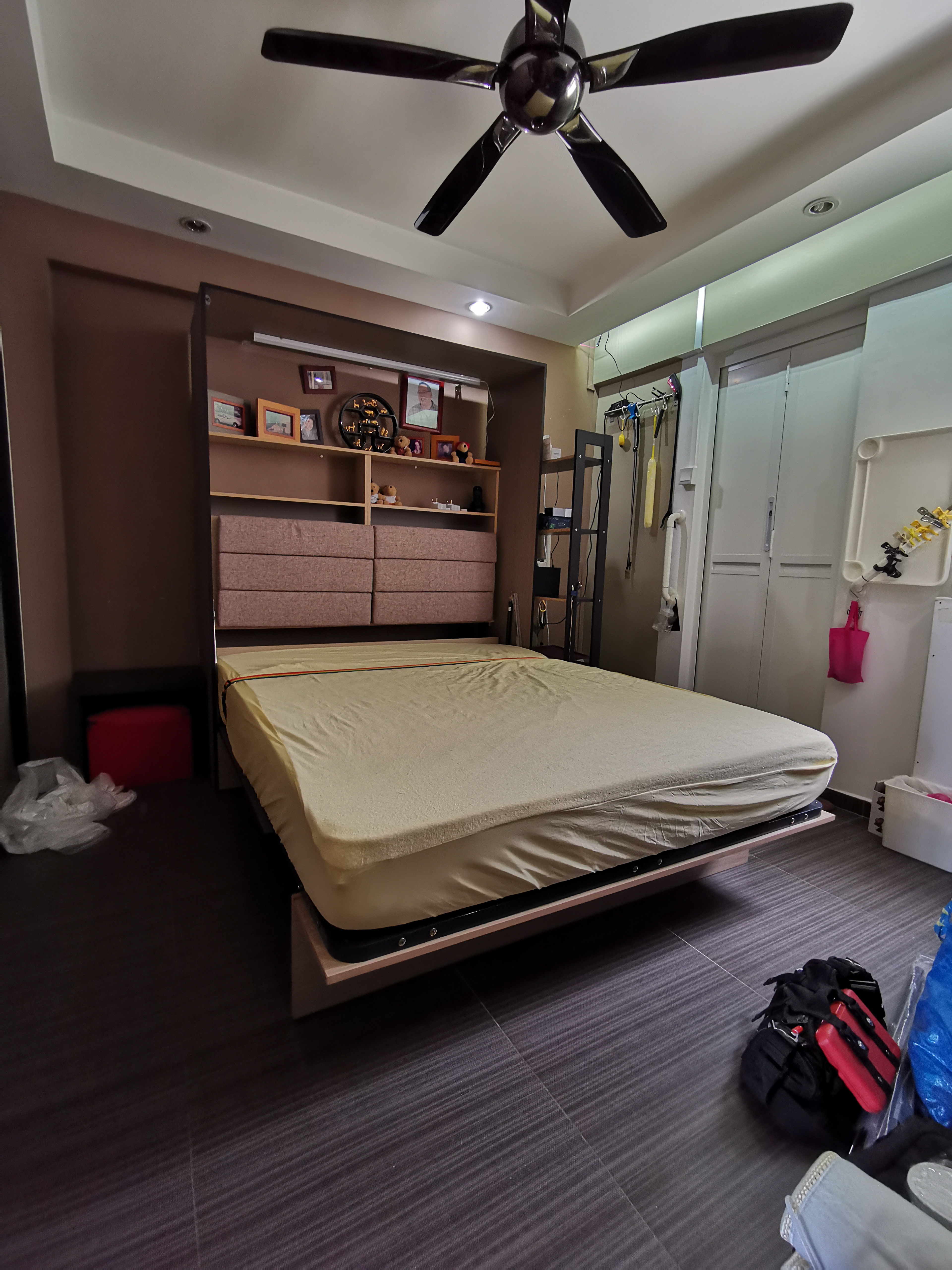
Some other Murphy bed systems incorporate support legs that are positioned closer to the centre of the bed frame or partially recessed underneath the bed.
This design offers several practical advantages:
Improved Safety
Because the support structure remains within the bed's footprint, there are fewer protruding elements that users can accidentally kick or trip over.
Better Walking Space
The area around the foot of the bed remains more accessible, making the room feel less cramped even when the bed is fully deployed.
Reduced Opening Length
One of the biggest advantages is the shorter overall footprint when the bed is opened.
Since the support legs do not extend beyond the front edge of the mattress, the total length required from the wall to the end of the bed can be reduced. This can be especially valuable in compact apartments, guest rooms, or home offices where every bit of floor space counts.
Cleaner Appearance
Recessed support legs are often less visible, resulting in a more streamlined and traditional looking design.


Comments